

Soft Wellness Practices for Quiet Evenings
Imagine warm light pooling on a favorite chair, the house slowing down and your breath sounding full and small. A quiet evening can feel like a gentle invitation to return to yourself.
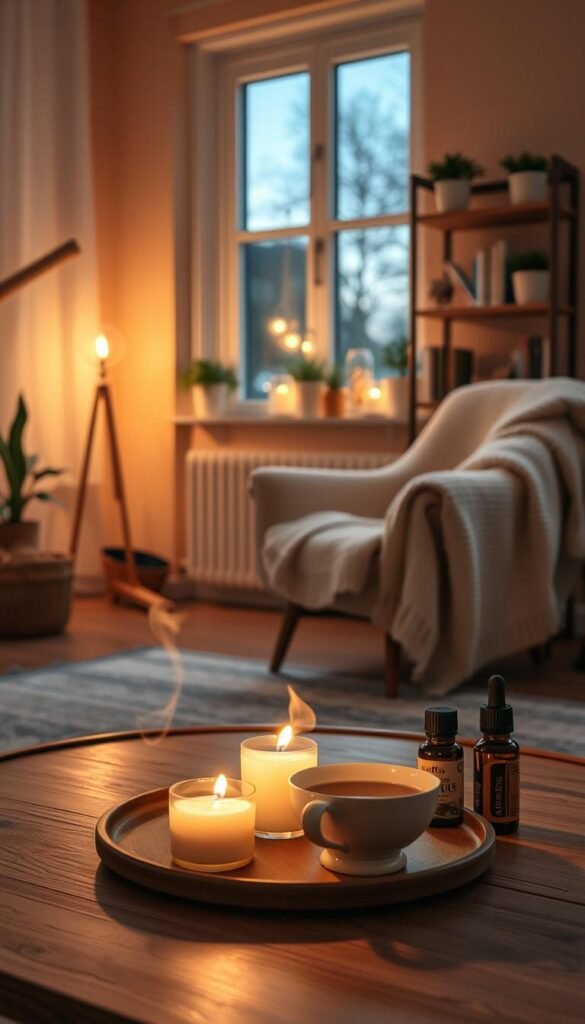
Create a tiny, intentional space in your home where a blanket, a candle, and a warm cup sit ready. Let the hush guide a simple routine that cares for your mind without pressure.
Hold a warm cup—maybe cucumber-infused water—and notice steam meet your face. These small actions make hydration feel like a spa moment and help your senses soften.
Reduce screen glow as the light fades. Choose fewer items and more intention so the room becomes calm by design. Over time, these gentle rituals become a kind companion for evening rest.
Arrive slowly. Let the atmosphere and your inner sense meet in the middle, and let ease be the aim rather than perfection.
Key Takeaways
- Create a simple nook to make evening transitions gentle.
- Use warm light and a cozy cup to soothe the senses.
- Limit screens to help your mind settle before bed.
- Keep the space minimal and intentional for calm.
- Focus on ease—not perfection—to build a steady routine.
A soft arrival: settle into the evening glow
Let evening light ease across the room and invite you to pause.
Dim the lamps so the room slips into a mellow glow. This small cue tells your body and mind it’s time to move more slowly. It is an easy way to mark the start of an evening that feels held and gentle.
Choose a corner of your home that welcomes you. Add a blanket, a pillow, and a favorite mug. These personal touches change a simple spot into a comforting space and bring a calm sense to the moment.

Dim the lights, breathe, and make a quiet nook
Take three soft breaths: inhale through the nose, exhale through the mouth. Let your shoulders drop and your jaw unclench. Place your phone in another room for a little while so attention can rest.
- Let the room’s warmth and gentle light show you a new way to spend time.
- Move calmly; arrival does not need to be rushed.
- Trust that these minutes invite calm for many people seeking a kinder evening.
Why these gentle rituals matter to the heart
Even a few quiet minutes can give your heart room to breathe. Gentle evening actions create a small sense of arrival where your feelings can rest. This steady pause helps emotions settle and gives them shape without pressure.
Simple rituals support both mental health and everyday wellness. Gratitude journaling nudges attention toward helpful moments and often brings more positive emotions. A short, kind message to a friend widens perspective and reminds you that connections matter to how we feel.
Moving gently for a few minutes eases physical tension and lightens the mind. These acts meet real needs and respect your energy. Over time, evenings like this can lift happiness and steady how you move through your lives.

- Give your emotions a safe place to land.
- Notice small good moments to make joy more available.
- Send a brief note to feel seen and less alone.
- Use gentle movement to release the day from the body.
Most of all, these rituals tell you that your feelings matter. They offer kind, practical ways to meet your inner life where it is tonight.
An unhurried evening flow: simple, soothing steps
Begin your evening with a few deliberate, calming actions that ask little and give much.
Warm cup ritual
Prepare cucumber-infused water or a gentle tea. Wrap both hands around the mug and sip beside soft light. The cool cucumber slices add a spa-like note and make hydration feel special.
Digital sunset
Choose a time to tuck your phone away. Let notifications fade and let the room breathe. This small shift gives the mind a quiet border from the day.
Slow body wake-down
Spend ten gentle minutes on mindful stretching or a short yoga flow. Move with the breath and focus on shoulders, back, and hips to ease tension.
Gratitude note
Write two or three lines of journaling to honor small, good moments. Notation helps focus attention and can help reduce stress.
Soft soundscape
Play calm music or gentle tones at low volume. Let the sound cradle the room and give attention an easy resting place.
- Keep each step light: five to ten minutes is often enough.
- If time is short, pick one or two steps; softness matters more than length.
| Step | Suggested Time | Purpose |
|---|---|---|
| Warm cup ritual | 3–5 minutes | Hydration, sensory comfort |
| Digital sunset | 5–10 minutes | Quiet the mind, reduce alerts |
| Stretching / yoga | 5–10 minutes | Release tension, build mindfulness |
| Gratitude note | 2–5 minutes | Shift attention toward good moments |
| Soft soundscape | Throughout | Create calming atmosphere |

Optional mini-rituals to match your mood
Choose one gentle action tonight that fits how you feel and let it guide the rest of your evening.
Warm cup, warmer hands: Hold the mug in both palms and sip slowly. This small, sensory moment is an easy example of care that takes only a few minutes and feels like a hug for your hands.
Digital sunset
Set a chosen time to put devices aside. Let the screen rest so your attention can take a quiet break and the room can settle into calm.
Slow journaling
Write a page of feelings without aiming for perfect sentences. Let lines wander; the goal is feeling seen, not literary polish.
Kind connection
Text a friend a short “thinking of you.” That small note often lifts both you and the people who receive it.
Fresh air stroll
Step outside for a few minutes. Notice sky, breeze, or a tree. A brief change of view can refresh your perspective quickly.
- The 10-minute reset: tidy a small area—a nightstand or tray—to make your space reflect the calm you want.
- Mix and match these ideas as time allows; one tender action can meet you where you are tonight.
| Mini-ritual | Suggested minutes | Purpose |
|---|---|---|
| Warm cup | 3–5 | Sensory comfort, hydration |
| Digital sunset | 5–15 | Quiet the mind, reduce alerts |
| Slow journaling | 5–10 | Emotional clarity, release |
| Kind text to friends | 1–2 | Connection, feeling held |
| Fresh air stroll | 5–10 | Shift perspective, reset energy |
Soft Wellness Practices woven into home and routine
Ten calm minutes of movement can be the bridge between a busy day and a quiet night. Make those minutes easy to reach by placing gentle cues in your home. The aim is to fold small, steady acts into an evening routine so care feels natural, not like extra work.

Gentle stretching to release the day
Roll a mat or lay a soft rug near your chair. Spend ten mindful minutes on slow neck, shoulder, and hip moves.
These short stretches ease tension from sitting and help your body unwind. Keep instructions simple: inhale to lengthen, exhale to soften.
Gratitude journaling to invite calm and perspective
Keep a small notebook by your lamp so writing becomes effortless. Each night, jot two lines of journaling about something that supported you during the day.
These moments shift focus and create steady balance. Set small goals like “note two gratitudes” so success is gentle and constant.
- Keep a mat and notebook within reach to weave these practices into evenings.
- Use a single cue—lighting a lamp or closing a laptop—to signal the start.
- Sprinkle pauses throughout day—three breaths before dinner or a stretch after dishes.
What to release tonight
Choose one small thing to release now and notice how the room seems to breathe easier.
Rushing, pressure, and perfection
Let go of hurry. If you move slower, your body and mind can shift out of stress and into calm.
Release the pressure to finish every item on a list. Tonight can be quiet, unfinished, and still restorative.
Choose a kind way: tuck your phone away earlier, tidy one small surface, or send a two-line note to a friend.

- Release rushing: honor how you truly feel rather than how you think you should act.
- Release pressure: accept that imperfect nights can still replenish your energy.
- Release perfection: pick a single, gentle step and let that be enough.
- If people feel pulled in many directions, pare back to one soft ritual that meets your needs.
- Let the clock loosen its hold; your time can feel tender and still hold meaning.
Notice the sense of space that arrives when expectations are set down and compassion is picked up. This small shift is a real way to care for yourself tonight.
Two tender prompts for reflection
Take a slow breath and let the evening’s shape settle.
Prompt 1: What felt soft or kind in this moment of the evening, and how did my body respond when I noticed it?
Prompt 2: What do I want more of in my life right now—comfort, connection, or clarity—and what small step aligns with those goals tomorrow?

Write slowly and without judgement. Let your emotions unfold at their own pace.
- Keep it brief if time is short—a few lines can shift perspective.
- Pause between prompts; take a breath to widen your view.
- These notes can remind you what matters to people you care about and to you.
| Prompt | How to try it | Time |
|---|---|---|
| Notice a kindness | Name the feeling and where it lived in your body | 2–5 minutes |
| Choose a small step | Pick one tiny action toward a goal for tomorrow | 2–5 minutes |
| Breathe between prompts | Take one full breath before writing | 30–60 seconds |
Conclusion
Invite one quiet moment tonight that supports sleep and steady energy.
Choose one simple action—sip cucumber water, tuck your phone away, or stretch for five minutes—and let that small choice mark the end of your day. These tiny habits ask little and can help reduce stress while soothing the body.
Over time, a gentle routine builds balance. A brief yoga move, a few lines of gratitude, or a short text to family or friends can steady your mind and lift health in small, real ways.
Some nights will be fuller than others. Both are okay. Let evenings be a kind, steady practice that supports healing, sleep, and the life you want to carry into tomorrow.
FAQ
What are evening rituals and why do they help?
Evening rituals are short, consistent actions you do before bed to calm body and mind. They lower stress hormones, improve sleep quality, and boost mood the next day. Simple steps like dimming lights, gentle stretching, or writing a brief gratitude note signal your nervous system it’s time to slow down.
How long should a quiet-evening routine take?
Aim for 10–30 minutes depending on your schedule. Even five focused minutes of breathing or a warm cup of tea can shift your state. The goal is consistency, not duration, so choose actions you’ll actually repeat each night.
What’s a good “warm cup” ritual for calm?
Prepare a warm, noncaffeinated drink like chamomile tea or cucumber-infused water. Hold the cup with both hands, breathe slowly, and sip mindfully. This sensory pause anchors you to the present and reduces mental clutter.
How can I reduce phone and screen use in the evening?
Set a device curfew—one hour before bed works well. Use Do Not Disturb or Night Shift settings, and put devices in another room or a designated basket. Replace scrolling with a soft playlist, reading, or journaling to ease the transition.
What are easy stretches to release tension before bed?
Gentle neck rolls, seated forward folds, and a lying knee-to-chest stretch help unwind shoulders and lower back. Move slowly, breathe evenly, and stop if anything feels painful. Even brief movement increases circulation and relaxes muscles.
How can I start gratitude journaling if I’m new to it?
Keep it simple: write three small things you noticed or appreciated that day. They don’t need to be profound—coffee steam, a kind text, or a quiet moment count. Short entries build a calming habit without pressure to be perfect.
What if I live with family or roommates and need quiet time?
Create a small, portable ritual: noise-cancelling headphones with soft music, a tea ritual in a corner, or five minutes of mindful breathing in the bathroom. Communicate your needs kindly—“I’m stepping into quiet time for 20 minutes”—so others can support your pause.
Can short evening practices really improve sleep?
Yes. Practices that reduce arousal—slow breathing, dim light, limited screens, and gentle movement—help the body shift into a rest state. Over weeks, these cues strengthen and lead to more consistent, restorative sleep.
How do I pick which mini-rituals fit my mood each night?
Check in with your body and emotions: tired and tense? Try stretching and a warm drink. Wired or worried? Do breathing, soft soundscapes, or two reflection prompts. Keep a shortlist of two to four options and choose intuitively.
Are there quick prompts to help me reflect before sleep?
Yes. Try: “What small thing made me feel calm today?” and “What can I let go of tonight?” These gentle questions guide perspective, reduce rumination, and invite closure without long analysis.