How to Build a Calm-At-Home Ritual
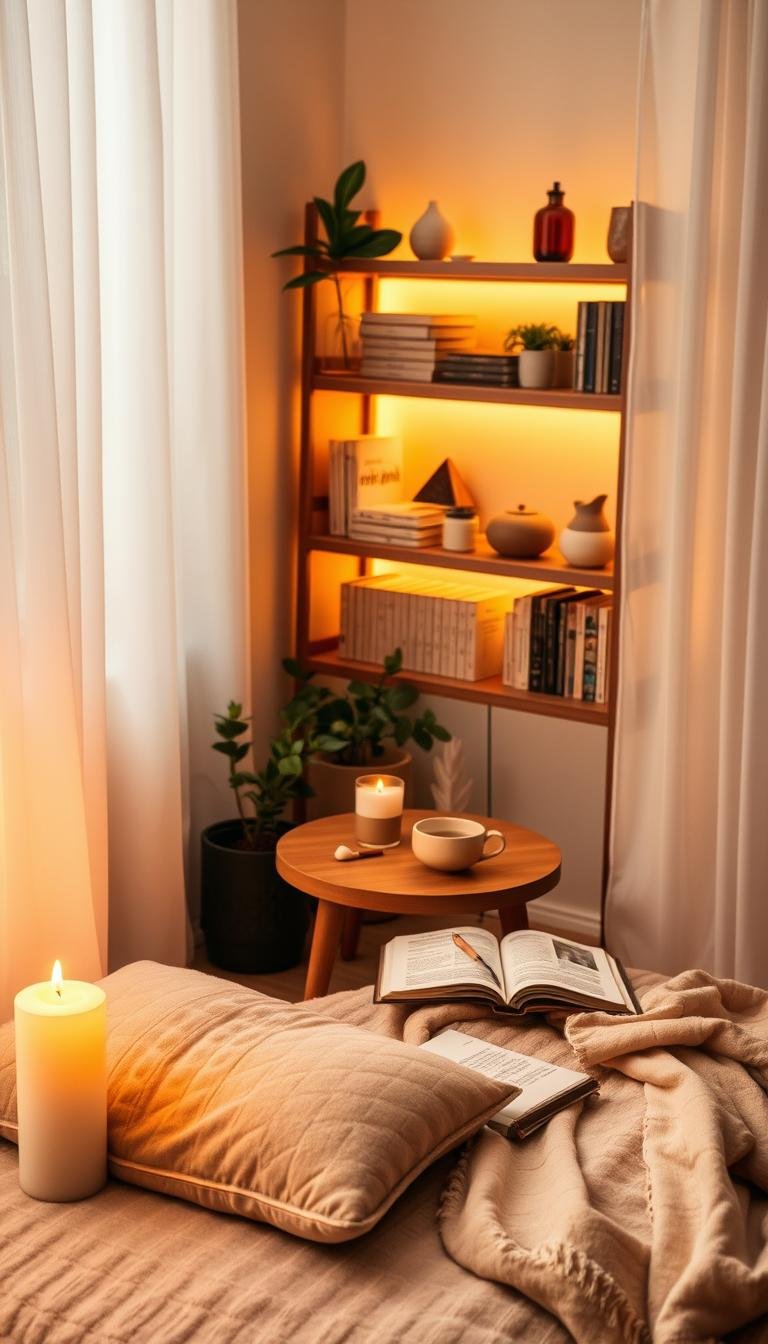
Imagine soft morning light pooling in the corners, a warm cup held between your palms, and a quiet space that feels like a small harbor.
This gentle doorway invites a Calm-At-Home Ritual that meets you with ease. Start with one simple step: a few mindful breaths, or a slow read for five minutes. Let intention guide you, not pressure.
We will walk through tiny rituals that soften the edges of the day. Choose a small routine that fits your life and returns a steady sense of peace.
Keep the practice light and flexible. Tidy a corner, sip tea, or pause to notice the world waking up. These small acts build presence and steady your sense of self.
At day’s end, a short wind-down helps you settle, like a warm blanket for the mind. The goal is gentle care, not perfection—your routine becomes a friend you meet each morning and throughout the day.
Key Takeaways
- Begin with a soft, sensory morning to invite calm.
- Choose tiny rituals that fit your routine and life.
- Use intention and mindful breaths to build presence.
- Keep the practice simple; flexibility matters more than perfection.
- Small pauses during the day restore a sense of peace.
A soft beginning: a quiet room, a warm cup, and unhurried light
Let the day arrive gently: soft light, a warm cup, and a few unhurried moments to simply be.
Begin in a quiet room where light moves slowly and the morning takes its own time. Hold a warm cup—coffee or tea—and notice its weight and heat. This small act invites a calm presence that steadies the senses.
Make this your space for a few simple moments. Sit, breathe, and watch how the light touches a wall or the edge of a table. Set a tender intention, such as “go gently” or “listen softly,” and let that intention guide the first way you meet the day.

- Read a page or two of something comforting or gaze out the window and watch the morning settle.
- Keep distractions away and savor the taste of your drink to deepen your sense of ease.
- Close with one slow exhale, a tiny bow to the day, carrying a thread of calm forward.
Why this ritual matters for the heart and home
Small, steady habits can quietly change the feel of a house and the mood of its people.
Daily pauses, a moment of gratitude before dinner, and a calm evening wind-down offer more than comfort. They create gentle structure that supports emotional grounding and a softer state of being.
Simple practices — like short journaling sessions or screen-free time — reconnect you during busy rhythms. These tiny acts give family members a shared signal that the day is shifting toward rest.

- Gentle routines bring steadiness to everyday life and make your space feel more welcoming.
- Small practices act as anchors, helping the heart feel supported and the mind less crowded.
- Shared moments before meals or a brief evening review deepen connection with family.
- The practical benefits include kinder transitions, fuller presence in conversation, and more time for what matters.
Over time, people notice a lasting sense of ease. Even on full days, a soft pattern can reshape your pace without pressure.
Your Calm-At-Home Ritual: a gentle, intentional flow
Create a short, gentle sequence that helps you arrive in the day with quiet attention.
Set the scene: soften lights, tidy a small corner, and breathe. Dim the lamps, light a small candle if you like, and clear one tiny surface. Two minutes of care can soothe the senses and invite mindfulness.

Set the scene: soften lights, tidy a small corner, and breathe
Sit comfortably and rest your hands. Take three slow breaths, making the exhale a beat longer than the inhale. Let the body notice the change.
Choose an anchor practice: breath, journaling, reading, or quiet movement
Pick one gentle practice you can return to for five minutes. Try a brief meditation, a page of reading, a few stretches, or two small journal lines.
- Dim lights and tidy one corner (2 minutes).
- Three slow breaths to come home to your body.
- Choose your anchor: journaling, reading, movement, or meditation.
- Keep it short—five unhurried minutes is enough.
Close with gratitude and a simple intention for the next moment
End by naming one nourishing detail from your moments—a warm cup, a kind word, or a patch of sunlight.
Try these journal prompts: “What felt gentle today, and how can I invite more of it?” or “Where can I soften my pace in the next hour?”
Offer a brief intention for what comes next, such as “move softly” or “listen with care,” and carry that gentle aim into the rest of your day.
Morning rituals that greet the day with ease
Start your morning by honoring the quiet: a slow cup and a soft breath to greet what’s ahead.

Warm coffee or tea in silence as the house wakes
Notice aroma, steam, and the hush. Hold your mug. Breathe in slowly and follow the steam to the rim of the moment.
Keep the first ten minutes screen-free. Let the quiet settle your attention before messages or tasks arrive.
Soft movement: yoga or stretching to invite presence
Move gently for three to five minutes. Try two simple stretches or a brief yoga sequence that opens your chest and hips.
The point is presence, not performance. Let each move be easy and kind to your body.
Three mindful breaths and a one-line intention
Take three slow breaths, making each exhale longer. Let your shoulders soften with every release.
Say one short intention aloud—something realistic and kind such as “move gently” or “listen well.”
Gratitude journaling: a few gentle lines to open the mind
Open a small notebook and write two or three lines of gratitude. Name simple details: sun on the floor, a warm sweater, a friend’s text.
Finish with a soft smile and a small stretch. Carry this quiet thread into the next part of your routine and the day ahead.
| Practice | Time | Benefit |
|---|---|---|
| Silent coffee or tea | 3–10 minutes | Grounding, sensory focus |
| Gentle yoga or stretching | 3–5 minutes | Opens body, invites presence |
| Three mindful breaths + intention | 1 minute | Calms nervous system, centers attention |
| Gratitude journaling | 2–5 minutes | Shifts outlook, fosters appreciation |
Daytime anchors to steady your energy
A one-minute habit between activities can keep your energy even and your attention kind.

Short, simple resets help you move through the day with less friction. These micro-pauses fit into busy schedules and ask for only a few minutes. They build quiet momentum and offer a gentle way to practice mindfulness.
One-minute mindful pauses between tasks
Between tasks, stop and unclench your jaw. Rest your shoulders and follow one full breath from inhale to exhale.
- Set a soft chime every two hours to cue a one-minute break.
- Keep a card at your desk: “breathe, soften, return.”
- Repeat a grounding sentence like “There is enough time for what matters right now.”
A step outside: porch air, a short walk, or tending a plant
Step outside when you can. Porch air, a quick walk, or watering a plant reconnects you to nature and refreshes focus.
Stand by a window and watch a cloud or a tree drift to let your energy settle. Sip fresh water slowly and notice how your body receives it.
| Anchor | Time | Benefit |
|---|---|---|
| One-minute breath pause | 1 minute | Calms nervous system, steadies attention |
| Outdoor step (porch or walk) | 3–10 minutes | Restores focus with nature contact |
| Tend a plant or window watch | 2–5 minutes | Softens pace, renews energy |
Treat these resets as care, not chores. Small routines like this keep your energy steady across the day and make tasks feel more manageable.
Evening wind-down for a cozy, screen-light night
Let the night arrive with soft actions that tell your body it can unwind.
Digital sunset: silence screens and dim the room at least thirty minutes before bed. This quiet cue helps your mind move away from bright thoughts and toward rest.

Take a warm bath or shower to rinse the day away. Let the water carry off tension so your body feels lighter and calmer.
Move through skincare with care. Slow, gentle massage tells your skin and nervous system this is time to rest.
Evening review and closing steps
Spend two minutes on a soft review: name one nourishing moment and one thing you release. End with a short note of gratitude before sleep.
- Read a calming page or two beside the bed.
- Try a few easy stretches or one short meditation to settle breath and thought.
- Lower the room temperature slightly and smooth covers to make the bed inviting.
- Hold a simple thought as you close your eyes—“I can rest now”—and let sleep come.
Optional mini-rituals menu for any time of day
Try these small practices when you need a quick soft reset in your day.
The warm cup pause: wrap both hands around your mug, take a slow sip, and notice heat, aroma, and the tiny moments of comfort it brings.
Ten-minute reset: tidy a small surface for a few minutes, take three slow breaths, then pour a fresh glass of water. This light sequence refreshes your space and your senses.
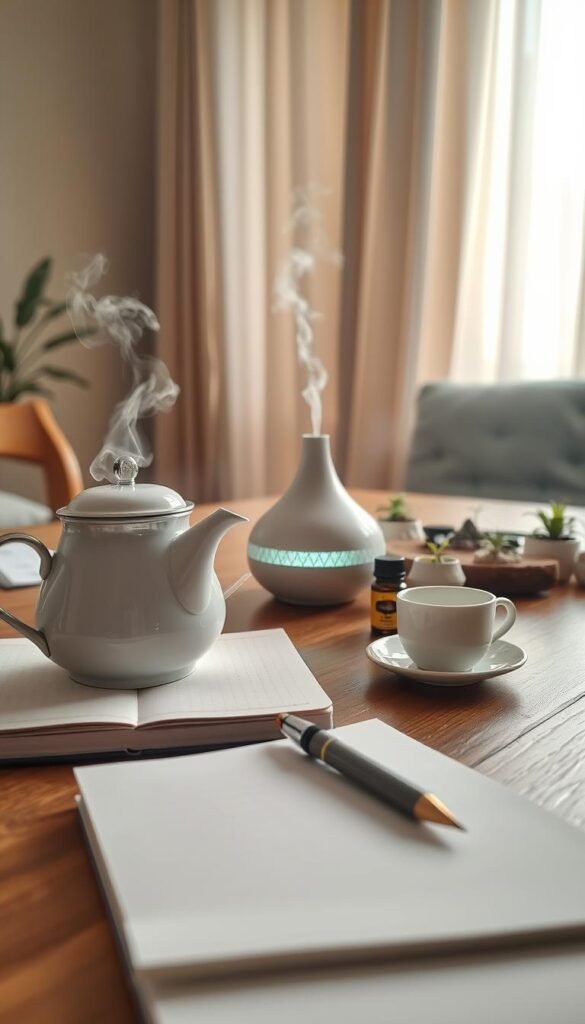
Slow journaling
Write a few tender sentences without pressure. Name what you feel and what you need in gentle words.
Meditation corner with four elements
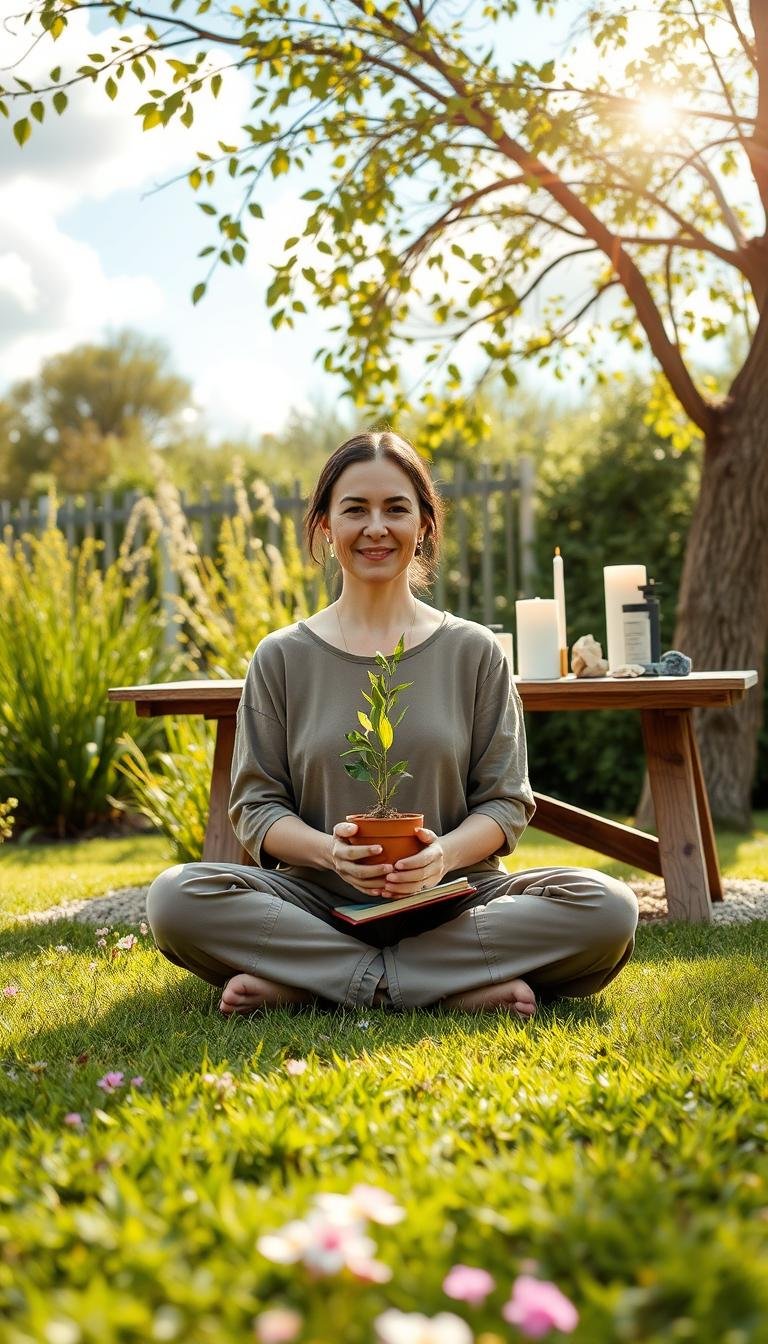
Create a small spot with earth (stones or flowers), fire (a candle), water (a bowl or cup), and air (incense or a feather). Sit for five minutes and let the elements anchor your attention.
- If you’re short on time, pick one idea and let it be enough.
- Keep tools in a small basket so mini-rituals are easy to reach.
- Treat these practices as soft invitations—return to any favorite whenever you want a gentle reset.
Creating a calm space: light, texture, and simple altars
A calm space begins with one quiet surface and a few well-loved objects.
Soft lighting and breathable fabrics set the mood. Soften overhead light with a small lamp or a candle. Choose cotton or linen for throws and pillows to let the air move and your skin breathe.

Soft lighting, breathable fabrics, and a small, clear surface
Clear one small area and let it become your anchor. Just enough room for a candle, a stone, or a tiny vase makes the space feel intentional.
Keep textiles light and tactile. A single linen cloth or a cotton throw adds texture without clutter.
Gathering simple objects with intention, not perfection
Choose simple things that matter: a leaf from a walk, a smooth pebble, or a photo that brings presence. Let one thing be the star—perhaps a single flower—so the whole arrangement reads calm.
- Include the four elements in a balanced way: earth (stone), fire (candle), water (small bowl), air (a feather or dried leaf).
- Keep routines in this corner simple so it stays a sanctuary; return items slowly as a small ritual of care.
- Let nature and your taste guide the layout; seasonal changes are part of the charm.
Notice the subtle shift when you arrive and when you leave. Trust that this small, tender curation will change the sense of your room and your day.
What to release and what to keep close
Decide today what to set down and what to carry gently forward.
Gently let go of rushing, pressure, and perfection.
- Release rushing by choosing one slower step at a time so your mind can unwind from crowded thoughts.
- Set down pressure by reminding yourself that kind attention is enough; perfection does not belong to a peaceful life.
- When the mind grows busy, name one feeling and one need to return focus without fixing everything.

Hold close presence, gratitude, and small daily practices
Keep close: one breath, one line of gratitude, and one tiny ritual repeated with clear intention.
Soft practices like a brief evening review help ease mental clutter. Small, thoughtful routines support everyday calm without striving.
Reflection prompt: “What can I kindly release today so I can move through my evening with ease?”
| What to release | Why | How to replace |
|---|---|---|
| Rushing | Clutters the mind and shortens attention | Choose one slower step and breathe |
| Pressure | Makes life harder and joy smaller | Use small practices with gentle intention |
| Perfection | Stops progress and increases worry | Aim for steady, kind effort |
| Busy thoughts | Distracts from simple pleasures | Name one feeling and one need |
Hold gratitude like a small candle—steady, warm, and bright enough to guide you toward more peace in ordinary life.
Conclusion
Let small daily choices shape a steadier day and a gentler sense of self.
Carry three anchors into every day: a soft morning quiet, short daytime pauses, and a calm evening wind-down.
Choose one or two simple practices that feel right now and let them grow without pressure. These tiny routines fit into real life and support a calmer state.
Over time you’ll notice a quiet change: your moments slow, your sense of ease deepens, and the world feels less hurried.
When you forget, begin again. Return to a breath, a warm chair, or a single kind intention. Meet each day with steadier grace.
FAQ
How long should my calm-at-home ritual take each morning?
Start with 5–15 minutes. Even a short routine that includes breathing, a warm cup of coffee or tea, and a simple stretch can reduce stress and steady your mind. Gradually increase the time as it fits your life and energy.
Where should I practice this ritual if I live in a small apartment?
Choose a small, consistent corner—by a window, near a bed, or a tiny table. Focus on soft lighting, a breathable fabric cushion, and one small object that grounds you, such as a plant or a candle. The aim is presence, not perfection.
What anchor practice is best for beginners?
Breathwork and one-line journaling are simple, effective anchors. Try three mindful breaths, then write one intention or gratitude sentence. Both practices calm the nervous system and sharpen attention without taking much time.
Can this routine help with daytime stress and focus?
Yes. Short daytime anchors—one-minute mindful pauses, a step outside for fresh air, or a ten-minute reset—break up tasks and restore energy. These practices improve focus, lower anxiety, and make work feel more manageable.
How do I transition from my day into an evening wind-down?
Create a digital sunset by dimming screens and lights, take a warm shower or bath, and move through a gentle skincare or slow journaling ritual. Close with a brief review of the day and a soft intention for sleep to ease your mind.
Is yoga necessary for a calm start, or are other movements OK?
Yoga is helpful but not required. Gentle stretching, mindful walking, or five minutes of slow movement will invite presence and wake the body. Choose what feels nurturing and sustainable for your routine.
How can I keep rituals consistent with family or roommates around?
Be clear about your small time blocks and ask for brief privacy. Use headphones for meditation, choose corners that won’t disrupt others, and invite family to share tiny rituals—like a morning sip together—to build supportive routines.
What items should I include in a calm space altar?
Keep it simple: a small dish or tray, a natural object (stone or plant), a candle or lamp for soft light, and a notebook or pen. Pick things that bring a sense of meaning and peace rather than clutter.
How often should I journal, and what should I write?
Aim for a few gentle lines each morning or evening. Write gratitude, a single intention, or a short review of feelings. Short, regular entries improve mental health and increase clarity without pressure.
Are there quick rituals to reset during a hectic afternoon?
Yes—try the warm cup pause (hold, sip, and notice), a ten-minute tidy and breath reset, or step outside for porch air. These mini-practices restore presence and energy in minutes.
What should I let go of when building these rituals?
Release rushing, perfectionism, and rigid expectations. Keep small, repeatable practices like presence, gratitude, and gentle movement close. Flexibility helps rituals feel like restful support, not another task.
Can mindfulness practices improve sleep quality?
Absolutely. Evening rituals—digital sunset, warm shower, calming journaling, and three slow breaths—signal the body to relax and prepare for sleep, often improving sleep onset and depth over time.