Emotional Declutter Routine for a New Year
Morning light spills across a quiet room. You cup something warm and let your shoulders soften. This small pause gives you time to begin with care.
Picture a gentle home where clear surfaces invite calm. Soft textures and open space make it easier to come back to yourself at the end of the day.
Name a simple intention: meet your feelings with kindness and choose a few items to tend to. Remember that memories live in you, not in paper or fabric.
Follow tiny, loving steps: hold each object, decide quickly to keep or let go, and give every thing a home so clutter does not migrate to your car or garage. Let this be a beginning, not a rush.
Pause when you need to sip, breathe, and return. Trust that this routine makes your room feel like a refuge. Celebrating the intention itself is already a meaningful start.
Key Takeaways
- Begin with a calm moment and a warm cup to set a gentle tone.
- Visualize a welcoming home with clear surfaces and soft textures.
- Meet feelings with kindness and handle a small group of items at a time.
- Remember memories live in you; objects only hold traces.
- Give things a home and act promptly on donate or sell choices.
- Take pauses, keep steps small, and honor the intention each time.
A soft beginning: welcoming light, a warm cup, and a quieter room
Start by turning down harsh lights and letting a softer glow fill the space. This small change makes the room feel gentle and easier to notice.

Wrap your hands around a warm cup—tea, coffee, or cocoa—and take a slow breath. Give yourself a tiny amount of time, just long enough for a few caring choices, not to fix everything at once.
Clear a small surface so the items you choose have a calm place to rest. Place a basket or tray nearby to gather things without scattering them across the floor.
Keep the pace slow: play quiet music or enjoy soft silence, open a window for fresh air, light a candle if that feels kind. Allow any feelings that arise to be present without judgment.
- Set a gentle timer for 20–30 minutes.
- Stand or sit with a soft posture; this is tending, not a race.
- Remember: the tone you set at the start shapes the rest of your home session.
Why this gentle routine matters for your heart and home
A few gentle decisions around your belongings can steady your mood and your home.
Our emotions quietly shape how a house feels. When objects gather without purpose, they can become visual clutter that tugs at your energy.

How emotions shape our space and the feeling of home
We attach stories to gifts, kids’ artwork, old clothing, and keepsakes. That sentimental value makes choices feel heavy.
Fear of disappointing people, sunk cost thinking, and the “what if I need it” worry are common problems. These feelings slow down the work and make decisions harder.
Naming the purpose of each item helps: ask whether an object supports your life now, and give it a clear home if it does.
From chaos to calm: creating a peaceful room you can truly exhale in
Small decisions build a peaceful house. Choose what belongs and release what doesn’t, one set of items at a time.
This routine is not about emptiness. It is about shaping a home that supports you and your family with grace.
- Memories live in you; keeping fewer objects can still honor the story they hold.
- Slow, steady work builds confidence more than sweeping changes.
- Each small choice brings the room closer to the calm you want for mornings and evenings.
Preparing your cozy space for Emotional Declutter
Create a calm start by choosing a small area that feels welcoming. A defined space helps decisions stay simple and kind.
Set the scene: soft light, clear surfaces, a small box, and a calm corner
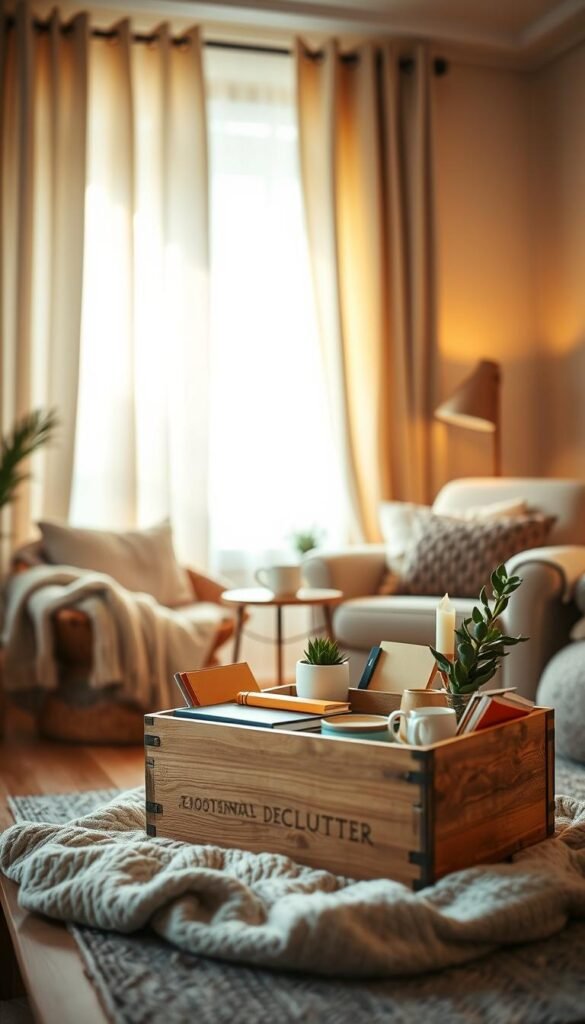
Clear one small surface so your items have a tidy place to rest. Bring a single box or shoebox to keep choices contained and cozy.
Gather similar pieces from a nearby closet so you can see them together. This makes patterns obvious and keeps you from digging through the whole room.
Choose time gently: 20–30 unrushed minutes and a simple boundary
Set a gentle timer for 20–30 minutes and promise yourself one small boundary—such as “just one box” for photos or small keepsakes. Label simple piles: Keep, Donate, Sell, Recycle, Trash.
Invite support: a trusted friend, partner, or organizer if you’d like
If it helps, ask someone else to sit nearby as a calm witness. A family member or a professional organizer can offer steady company without pressure.
Keep supplies close, plan to scan papers kept from past years, and move outgoing donations within days—not months—to keep progress visible and kind to your home.
Slow step-by-step rituals to declutter with care
Choose a single drawer or a small box and let that be your whole focus for twenty minutes. This makes the task feel like a gentle ritual instead of a big job.

Begin small
Start with one drawer, one box of photos, or a few kids’ toys from a shelf. Tiny projects keep the closet and room from feeling overwhelming.
Gather with intention
Bring similar items together so patterns appear. Seeing objects side by side makes each decision clearer and calmer.
Create soft boundaries
Choose one shoebox or a favorite few pieces as your limit. Let “enough” be a feeling, not a number, and honor that boundary.
Sort kindly
Use five simple piles: Keep, Donate, Sell, Recycle, Trash. Keep what warms you, set aside what can help others, and send worn pieces to recycling or trash without guilt.
Close the loop
Photograph a cherished item before you release it to preserve the memory. Schedule a quick trip for donations or list easy-sale items on Facebook Marketplace or eBay so you actually get rid of them.
- Work in short minutes; a timer keeps you present.
- Label one outgoing bin and move it out within days.
- A few steady rituals reduce clutter and protect your calm.
Optional mini-rituals for steady, gentle progress
Begin with a small, soothing ritual that takes just a few quiet minutes. These short practices help you move forward without pressure and protect your energy.

Warm cup ritual
Sip slowly, breathe, then make one loving decision about one or two items. This simple pause turns a choice into a caring moment rather than a chore.
Digital sunset
Dim screens and play soft music. Tend a tiny area—maybe a shelf or a corner of the closet—and spend no more than 20–30 minutes so the process stays kind and doable.
Slow journaling
Write a few quiet lines to anchor your feelings. A short note about why you kept or released things helps the next session feel clearer and gentler.
10-minute reset
At day’s end, return items to their home and clear a single surface. A quick 10-minute reset makes progress visible and keeps visual clutter from piling up.
“Small, regular habits are the way to long-term change.”
- Tips: set a calm timer and use a soft lamp.
- Keep a small basket for wayward things and empty it weekly.
- If you feel like stopping, pause—your body knows enough for today.
| Ritual | Duration | Benefit |
|---|---|---|
| Warm cup | 5–10 minutes | Easy decision, kinder mood |
| Digital sunset | 20–30 minutes | Less screen strain, focused effort |
| Slow journaling | 5–10 minutes | Clarifies feelings and intent |
| 10-minute reset | 10 minutes | Visible progress, tidy surfaces |
Tender care for sentimental items and memories
Tenderly sort a single shoebox of keepsakes so you can honor the story without overwhelm.
Begin small: pick one clear set—an example might be a stack of cards, a few kids’ toys, or a box of letters. Working with one box keeps the work kind and doable.

Honor the story: memories live in you, not only in the object
Hold an object, breathe, and ask how it makes you feel. If the memory is strong without the thing, a photo or a short journal note can preserve the moment.
Kind decisions: questions that help you choose what stays
Try gentle prompts: When did I last use this? Does this item add joy to my daily life? Could a picture or a line in a journal keep the memory?
Give items new life: donate, sell, or photograph to preserve the feeling
Let sentimental value guide what stays: choose a favorite few and release the rest with thanks. If something could brighten another family’s home, consider a local thrift shop or charity.
- Sell simple pieces on eBay, Facebook Marketplace, or consignment for an easy sale.
- Photograph meaningful objects so the memory remains as shelves clear.
- Create a small ritual—light a candle or say a brief thank-you—before placing outgoing items in your basket.
What to release: rushing, pressure, and perfection
Letting go of hurry can make space for steadier, kinder choices around your things.
Rushing creates a fear that you must finish everything now. That pressure often leads to all-or-nothing thinking.
Slow progress is still progress. Try one small action—one drawer or one box—and honor that step as part of the larger process.

Let go of all-or-nothing: slow progress is still progress
When perfection shows up, pause and breathe. Remind yourself that tiny releases add up over weeks.
If you hold onto a thing because you think you might need someday, note the specific problem it solves now. If none exists, consider letting it go.
Soften the stories: gifts, “someday” items, and the money already spent
Guilt about gifts is common. Separate love for the giver from the object and keep what truly supports your family today.
Sunk costs from years ago do not have to stay in your house. Forgive past purchases and keep items that serve a clear purpose now.
| Worry | What it says | Gentle reframe | Simple action |
|---|---|---|---|
| Fear of needing it later | “I might need this” | “I can find another solution if needed” | Take a photo, then let it go |
| Guilt over gifts | “Keeping honors the giver” | “Love doesn’t require the item to stay” | Keep one special piece; donate the rest |
| Sunk-cost worry | “I spent money on this” | “Money spent is past; purpose is now” | Keep items that solve a current problem |
| Perfection pressure | “It must be flawless” | “Small, steady steps build calm” | Set a 20-minute gentle timer |
Quick reminders: when feelings rise, pause. If stuff crowds your homes and daily life feels harder, allow yourself to get rid of a few items without overthinking.
Gentle progress is quiet but powerful. Each small release moves your house closer to the calm you want for your family.
Emotional Declutter journaling prompts for a calm reset
Rest your pen and notice the feeling of enough in this little corner of your home. A few soft lines in a journal can guide steady, kind choices.

What does “enough” feel like in my room right now?
Settle your breath and ask: does this space feel spacious, simple, or warm? Give a one-sentence answer and notice how your body responds.
Try this prompt: “If I kept only one box of favorites, what would that box hold and why?” Jot a quick list to name the purpose each item serves.
Which two items, if lovingly released, would create the most peace today?
Look around and choose two things that, when gone, would free a small corner of the home. This tiny decision makes real change without hurry.
- Write the item, the memory it holds, and one line about how it helps you now.
- If a memory feels tender, photograph the item and write a short note so the story stays.
- Close with one gentle intention for the week ahead and one small step you will take in time.
“Small choices built with care change the way you move through your space.”
Conclusion
End your session by noticing one small change that already makes your room feel lighter.
Take a steady breath. Celebrate a simple win: one shelf cleared, one box sorted, one corner eased of stuff.
Use the next small steps: move donations within days, list a favorite item for sale, or drop paper in a local recycle or textile program.
Keep the pace kind: return in short sessions, invite someone else to help when a problem feels big, and let memories stay in your heart more than in things.
Trust that tiny, loving choices reduce clutter and protect calm. Carry this gentle way forward, one small repeat at a time.
FAQ
What is the routine called "Emotional Declutter" and who is it for?
This gentle routine helps you make space in your home and heart by pairing small clearing tasks with mindful pauses. It’s for anyone who feels overwhelmed by stuff, sentimental items, or unfinished projects and wants a calm, sustainable way to reclaim time and room without harsh rules.
How long does each session take?
Aim for 20–30 unrushed minutes. Short, focused sessions fit into busy days and reduce dread. If you have more time, stack a few mini-sessions across the week rather than pushing for an all-day purge.
Where should I start if my house feels chaotic?
Begin small: a single drawer, one box of photos, or a child’s toy bin. Clearing one visible spot gives quick wins and builds momentum. Choose projects that feel doable and won’t trigger fatigue or guilt.
I hold onto things for sentimental reasons. How do I decide what to keep?
Ask gentle questions: Does this item bring warmth or stress? Will I use or enjoy it in the next year? Could a photo capture the memory instead? Keep a favorite few and consider photographing or donating others so the story stays without the clutter.
What if I feel pressured to get rid of items quickly?
Release the all-or-nothing mindset. Progress can be slow and steady. Set a soft boundary—one shoebox or one shelf at a time—and honor your pace. Small, consistent choices add up to big change.
Can I involve family or a friend in this process?
Yes. Invite a trusted friend, partner, or professional organizer for support, accountability, or help sorting hard choices. Keep expectations clear: ask for gentle help rather than criticism to preserve a calm atmosphere.
How do I handle kids’ toys and belongings without causing upset?
Make decisions together when possible. Offer choices—select a few favorites to keep out, rotate the rest from storage, or create a “one-in, one-out” rule. Framing changes as a way to make play easier helps kids adapt.
What should I do with items I want to remove but feel guilty about tossing?
Consider donation, resale, or gifting to someone who’ll use them. Photograph items you find hard to part with to preserve the memory. Scheduling a donation drop-off helps close the loop and reduces lingering guilt.
Are there simple rituals that make decision-making easier?
Yes. Try a warm cup ritual—sip, breathe, then make one loving decision. Use a 10-minute reset to return items to their homes. Slow journaling for a few lines after sorting helps anchor feelings and clarify next steps.
How can I prevent clutter from coming back after clearing?
Create soft systems: designate clear homes for items, limit new purchases, and run short weekly or monthly resets. When new stuff arrives, pause and ask whether it brings real value or just more work to store.
What if I need to sell items—how do I start without getting overwhelmed?
Start with a small batch of high-value or easily sellable pieces. Photograph, list, and schedule a single pickup or drop-off day. If the process feels like too much, donate or recycle the rest to free space quickly.
Can digital clutter be treated the same way as physical items?
Yes. Apply the same gentle rules: set aside a short time, group similar files, delete or archive what you no longer use, and organize important items into clearly labeled folders. A “digital sunset” ritual—dimming screens and sorting one area—helps maintain balance.
I worry about letting go of things I might need "someday." Any tips?
Ask how likely that “someday” truly is and whether the item has served you recently. If you must keep it, contain it in a labeled box with a review date. Often the fear of future need fades when items are held in a limited, intentional way.
How do I honor memories without keeping every object?
Preserve stories through photos, a short journal entry, or a memory box with a few meaningful pieces. Sharing stories with family or creating a digital album lets memories live on without filling drawers and closets.