
Soft Productivity Tips for April
Morning light spills across the windowsill. You hold a warm cup and feel the house breathe slow. This quiet day gives you a gentle start and a sense that time can be kind.
Begin with a small ritual: set a traditional alarm clock and keep your phone in another room, as Julie Morgenstern suggests. Plan your hardest task first, a method used by Adunola Adeshola and Tim Lockie, then use short focus blocks inspired by Hannah Harris to keep energy steady.
Add daylight and a plant to your place, and turn off nonessential alerts. Larry Kim and Anna Johansson both note that fewer notifications help calm the mind. Use cozy breaks, tiny movements, and soft breaths between work windows.
Honor grace over hustle. Choose what warms your spirit and leave the rest. Let this month unfold with slow pace, clear time, and gentle care.
Key Takeaways
- Start the morning with a calm ritual and minimal screens.
- Plan your hardest task first to set a steady tone for the day.
- Work in short focus blocks and take gentle breaks.
- Create a bright, plant-filled place and limit notifications.
- Prioritize grace and small, sustainable steps.
A gentle April welcome: soft light, fresh air, and a slower day
A soft breeze moves the curtain and invites a kinder pace.
Open a window and let the morning breathe into your room. Soft light can guide how you shape each day and set a calm rhythm for work and rest.
Make sure your first habit is simple: stretch your shoulders, sip water, and let the air reach your face. Small rituals like this quietly shape time and mood.
Quiet notifications and a gentle, lyric-free soundtrack reduce interruptions. Anna Johansson and Larry Kim both note that fewer alerts restore focus and ease mental clutter.

- Invite fresh air and open blinds to soften the room.
- Choose one new habit at a time: a tidy corner or five minutes of stillness at night.
- Notice the impact of calmer light on your focus and on how you spend your time.
Hold routines loosely. Let habits feel like care, not control, and let each night close gently so the next day can rise softly.
Why this routine matters emotionally: a calmer way to care for your time
A calm start offers space for goals to feel reachable rather than heavy.
The point is not to push harder, but to let your day hold you. Prioritizing one essential task early—an approach used by Adunola Adeshola and Tim Lockie—gives quick emotional relief and steady momentum.
Using lyric-free soundscapes during language work, as Sarah Landrum suggests, eases strain on the brain and clears paths for thinking and writing.

- Choose the single most important thing and begin there.
- Create a quiet workspace and a tidy notepad to protect attention.
- Use soft background audio without lyrics to reduce cognitive load.
| Method | Emotional Benefit | Practical Result |
|---|---|---|
| One essential task early | Calm, measurable relief | Visible progress that lifts mood |
| Lyric-free soundscape | Less mental chatter | Smoother reading and writing |
| Tidy tools & small habits | Psychological safety | Fewer switches, deeper focus |
These gentle habits protect attention and soften overwhelm. They remind each person that time is precious and that warm, humane care makes any goals feel possible.
Slow rituals to shape your day with ease
Let a soft rhythm shape your hours: short, calm sessions and quiet breaks.
The kind Pomodoro asks for 25 minutes of quiet focus, then a 5-minute pause. Use these minutes to breathe, stretch, or sip water.
Repeat this pocket of attention gently. After three to four cycles, take a longer rest of 15–30 minutes to reset your time and energy.
The kind Pomodoro: work in quiet 25-minute pockets, then breathe
Pick one task per pocket and keep the aim small. A single task feels kinder and clearer than a long list.
Create a daily focus block with do not disturb and a soft away note
Turn on do-not-disturb and leave a warm auto-response that says you’ll reply later. This shields your time from emails and pings without rudeness.
“I’m in a focus block and will respond after this session.”
Close the day with a digital sunset to soothe your brain
Dim screens near the end of the day and sign out of inboxes. A simple ritual at the end signals rest and helps the mind unwind.
- Try 25 minutes on, 5 minutes off and repeat until done.
- Take a longer break after a few cycles to return softer and clearer.
- Keep the room quiet—lyric-free music or stillness reduces distractions.
- Treat each step as a habit you can hold lightly; let it help you boost productivity without strain.
Sleep first: tender nights and unhurried mornings
Tuck the day’s noise away and welcome a quiet night that gently readies the next morning.

Swap your phone for a simple alarm clock on the nightstand. Julie Morgenstern suggests moving the phone out of the bedroom so early email checking does not shape your morning. A small, analog clock keeps wake-up gentle and invites presence before screens arrive.
Swap your phone for a simple alarm clock
Leave the phone in another room and bring a plain alarm to the bedside. This change reduces the impulse to scroll and helps mornings begin with calm motions instead of inboxs and pings.
Evening wind-down: low light, light reading, and a gentle bedtime
Make sure evenings feel soft: lower the lights, sip something warm, and choose light reading so your body knows the night is arriving.
Reader’s Digest notes a Harvard finding that lost sleep can cost days of output; frame this simply as a reason to favor rest-first routines. Aim for steady hours of rest that feel good to you and keep bedtimes similar so the morning rises without rush.
- Keep the nightstand uncluttered—book, lamp, water—so the space invites calm.
- Build a repeatable flow: wash face, stretch, breathe, then sleep.
- Let mornings be unhurried: soft light, a slow sip, small motions before screens.
“A quiet, repeatable flow can become a comforting habit that helps you get enough rest.”
Nourish softly: light meals, steady energy, and a warm cup
A soft midday plate can steady your energy and warm the hours ahead.
Make lunch simple and kind. A gentle mix of lean protein, whole grains, and colorful vegetables keeps the day even rather than spiky.
Midday balance: lean protein, complex carbs, and colorful produce
Choose one easy habit: build a plate with chicken, fish, tofu, or beans; add brown rice, quinoa, or whole-grain bread; top with bright greens and roasted veg.
Eat lightly so you can return to tasks without heaviness. A bowl of grains, beans, and greens is filling but soft on the stomach.
Herbal sips and infused water to keep your energy even

Keep a warm cup nearby. Peppermint or ginger tea feels cozy and can help the brain feel clear during focused time.
Infuse water with lemon or cucumber to make hydration a small pleasure you visit often. When time is tight, lean on simple resources like pre-cooked grains, cut veg, and a jar of nuts.
“Prepare a cup, step into daylight, breathe for a moment — then return to your task.”
| Choice | Why it helps | Quick swap |
|---|---|---|
| Lean protein | Steady energy | Chicken, tofu, beans |
| Complex carbs | Slow-release fuel | Quinoa, brown rice, whole grains |
| Herbal sips & infused water | Comfort and gentle hydration | Peppermint tea, lemon water |
- Rotate simple ingredients to get enough variety through the week.
- Let one small task anchor the midday: prepare your cup, step into light, and breathe before returning to work.
- Balanced, colorful choices can boost productivity gently by making focus feel more accessible.
Move in small moments: five minutes to reset your day
Step away for five quiet minutes and let a small motion reset your mood.
Short walks and gentle stretches refresh attention without stealing time. Katie Driver recommends a brief walk to boost focus, and a hallway lap or a window pause works well in an office setting.

Take minutes to stand, roll shoulders, or breathe fresh air. These tiny acts change how the next work pocket feels.
Short walks, easy stretches, and standing to refresh focus
Stand each hour if you sit often. One minute to stretch or to swivel the neck invites circulation and ease.
“A short walk around the building can soften tension and restore attention.”
- Take time for five quiet minutes: stand, roll your shoulders, or walk to a window.
- Invite a teammate if you like—being with people for a lap of fresh air can lift mood.
- Notice the impact: small movement often makes the next focus session feel lighter.
Keep it simple: a few steps, a stretch, or standing to read helps reduce sluggishness and keeps your day gentle.
Soundscapes for focus: music without lyrics and quiet rooms
Let sound be a gentle companion while your mind does the heavy lifting.
When work asks for words—reading, drafting, or editing—lyric-free tracks often help the brain stay with the page. Sarah Landrum notes that music without lyrics reduces language interference and makes sentences easier to follow.
Many people prefer silence. Others find instrumental or ambient playlists supportive. Experiment kindly and notice what works best for your own flow.

Choose calm audio and guard your time
Keep volume low and steady so sound holds you rather than pulls you. Quiet notifications to limit distractions, as Larry Kim suggests.
“Let your sound choices be soft companions—subtle supports that gently boost productivity without pressure.”
- For words, try instrumental or ambient tracks to protect focus.
- If silence soothes, allow the room to be quiet and notice the effect.
- Use short playlists tied to a focus block to start and stop with ease.
- Nature soundscapes—water, wind, birds—can lift a day without cluttering attention.
Paper before phone: soft planning for tasks, emails, and to‑do lists
Start your day with a pen and a quiet page before reaching for any screen.
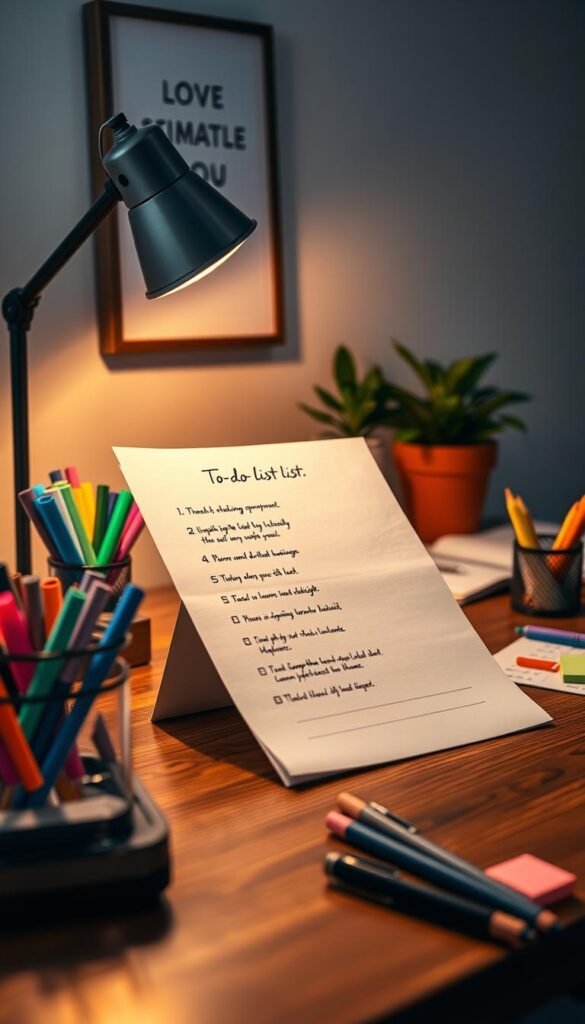
Open a notebook, breathe, and write a short to-do list that feels true to the day. This gentle act roots your attention and keeps the inbox from setting the pace.
GTD-style capture: keep everything in one calm place
Capture first, decide later. Use a single notebook or trusted app to collect tasks, ideas, and emails you need to process. Samantha Safin endorses this calm capture method.
- List quick items, then circle the most pressing task—tackle that in a protected block.
- Let your calendar hold times; keep the to-do list light and honest.
- If you must check your phone, wait until after you’ve captured and prioritized.
End-of-day note: write the one thing for tomorrow
At the end of the day, close the loop with a small ritual.
“Write the one thing you will complete tomorrow.”
Jot who to contact, when you’ll start, and what you’ll need. This tiny plan lets you shut the notebook softly and wake with a clear task at hand.
Nature at your desk: plants, sunlight, and a clear place to work
A sunlit corner can quietly change how you approach the next hour.
Let daylight reach a small place on your desk and soften harsh overhead glare with a warm lamp. A calm light makes the room easier to enter and helps your body read the day. This small shift often reduces visual strain and the urge to switch tasks.

Let in daylight and soften your workspace lighting
Keep lights warm rather than bright white. Position your monitor to avoid direct reflection and let natural light fall across a tidy surface. Small changes in light can shift how your time feels.
Add a small plant and tidy surfaces to ease distractions
Choose one plant—a pothos, snake plant, or tiny succulent—to bring a bit of green into your office corner. Keep only what you need for the next focus pocket so work remains simple and welcoming.
- Clear a small place and let daylight in; add a soft lamp for late hours.
- Use one plant to invite nature and lower visual distractions.
- Close extra tabs and keep tools in a small tray to reduce pulls on attention.
| Element | Effect | Quick action |
|---|---|---|
| Daylight & warm lamp | Soothes eyes; steadies mood | Open blinds; use a warm desk lamp |
| One plant | Boosts calm; reduces stress | Pothos, snake plant, or succulent |
| Tidy surface | Fewer distractions; easier return | Keep only essentials for the next task |
Lighten the load: fewer tools, gentle delegation, less busy work
Lighten the mental load by choosing only the tools that truly earn their place on your desk.
Keep your toolkit small. Jory MacKay advises that fewer apps mean fewer interruptions and less switching between things. This saves you a lot of time and reduces friction during the day.
Quiet the notifications and hand off what doesn’t need you
Make sure notifications are muted during focus blocks so emails and chats arrive when you choose. Larry Kim notes that quieted alerts protect attention and steady your flow.
Delegate small tasks to people who can help so you can focus on higher-value work. Jennifer Cohen recommends giving clear ownership and a brief handoff note in business settings to avoid confusion.

- Review your tool stack once a month; remove apps that add duplication or friction.
- Use one shared doc for tasks and status so updates live in a single place.
- Consider gentle automations or text shortcuts only if they truly save time and do not add complexity, as Richard Devine suggests.
“Lightening busy work is an act of care—your energy is valuable and deserves protection.”
Small changes add up. Let go of a few tools, hand off routine tasks to trusted people, and quiet alerts so your attention stays on what only you can do.
Productivity Tips for April: a soft, mindful list to guide your day
Choose one meaningful project to start while the light is soft and your focus is fresh.
Begin with your kindest big task while the morning is bright
Pick the hardest meaningful task first, as Tim Lockie and Adunola Adeshola suggest. A single small win steadies the whole day.
Take real breaks, step away, and breathe between tasks
Use short focus blocks like Hannah Harris’s gentle Pomodoro. After each block, step outside, sip water, or stretch your shoulders.
- Keep a short list with only three items so your time stays calm and doable.
- Choose lyric-free sound when reading or writing and notice what works best for you.
- Set a do-not-disturb window (Sanjeev Kumar) to protect focus and guard your goals.
- Pause between tasks—stand, breathe, or find sunlight to reset attention.
- Keep a cozy toolkit: pen, notepad, and a warm cup to make tasks inviting.
- End the day with a one-line note for tomorrow (Nathan Ellering) so you can close the page with ease.
“One kind action at the start of the day often shapes what follows.”
Optional mini-rituals for cozy focus
Set an intention with a simple motion: pour a drink, close a notebook, and breathe twice.
Warm cup ritual: brew tea or cocoa to mark a new work block. Hold the mug, inhale, and take a slow sip. This small habit cues your mind that a focused hour has begun.
Digital sunset: dim screens, close emails, and place your phone in another room at night. Let the end of the day be gentle so sleep arrives without pings. Treat this as a flexible habit, not a rule.
Slow journaling: write three gentle lines: what felt good, what felt heavy, and one kindness to offer tomorrow. This short plan clears mental clutter and makes next steps easier.
Ten-minute reset: tidy your desk, scan the calendar, and shorten your to-do list. A quick tidy saves time tomorrow and leaves your workspace calm.
“Use these small resources when you need comfort—let each habit support you without pressure.”
- Keep rituals optional and repeatable so they fit busy days.
- Use a warm cup and a short plan to protect a little time for yourself.
What to release this April
Begin by reducing the number of things that ask for your attention. Say no to one extra meeting or request. Choose what truly matters this day and let smaller pulls fall away.
Quiet notifications and fewer apps free up real time. Lighter evenings and less night scrolling help sleep arrive sooner. Fewer tools mean fewer distractions and more steady focus.
- Release the pull to say yes to too many things; pick one clear aim.
- Let go of the need for every thing to be perfect; offer kind presence instead.
- Ease the pressure to be reachable—people can wait while you take time to rest.
- Soften nighttime scrolling so sleep comes more easily.
- Reduce the lot of tiny commitments that scatter your time; gather or let some go.
- Give yourself permission to move slowly; gentle care grows real productivity.
“Small, consistent care creates more ease than big leaps driven by pressure.”
Two soft journaling prompts to reflect and realign
Before you close the notebook, give yourself one clear line to carry into the next day.
Pause and write one quiet sentence that will shape how you begin tomorrow. Keep it short. Write a tiny plan to make that sentence actionable when you wake.
Which small habit helps my day feel spacious and kind?
Ask which habit—one slow sip, a five-minute walk, or a pen-to-paper ritual—makes hours feel roomier. Name that habit and note a simple way to honor it tomorrow.
What can I do less of to feel present with my work and people?
Identify one task or pull you can reduce so you can be more present with a person at your desk or on a call. Write a one-line plan: what you’ll say no to, and when you’ll start.
- Write the one sentence you want to carry into tomorrow, then add a tiny plan to begin easily.
- Keep reflections in a single place so your thoughts are simple to revisit when you feel scattered.
- Note what goals feel aligned now and what can wait so tasks stay meaningful.
“End with a soft breath and a single small task to start tomorrow.”
Conclusion
Let a single clear priority guide the next morning and free the rest of your hours.
Close each day with one small plan. Write the one thing on your to-do list that will help you get done what matters most the next day.
Use short focus windows, quiet notifications, and steady hours to protect that work. Keep your calendar light and give honest breaks so more can get done with less strain.
In business and at home, a few calm blocks often have more impact than constant checking. Put the phone aside and touch emails in calm windows so presence reaches the people around you.
Rest well. Return to these gentle tips when you need them and trust that small rhythms carry you every day.
FAQ
How can I start the day gently without rushing into my to-do list?
Begin with a short, calming morning ritual: open a window for fresh air, sip a warm drink, and spend five minutes writing one clear, kind goal for the day. Use a simple alarm clock instead of your phone to avoid immediate notifications. This sets a softer pace and helps your brain warm up before work.
What is a practical way to break work into focused periods without burnout?
Try a gentle Pomodoro: 25 minutes of quiet, focused work followed by a 5-minute reset. During breaks, stand, stretch, or step outside for a breath of fresh air. Label your calendar as Do Not Disturb for a daily focus block so people know you’re offline.
How do I create a calmer workspace at home or in the office?
Let in daylight, reduce clutter, and add a small plant to soften the space. Tidy surfaces each evening and keep only the tools you need on your desk. Dim overhead lights if they’re harsh and use a lamp for warm, focused lighting.
What are simple lunch ideas that keep energy steady through the afternoon?
Choose lean protein, complex carbs, and colorful produce—think a grilled chicken salad with quinoa or a whole-grain wrap with hummus and veggies. Sip herbal tea or infused water to stay hydrated without heavy stimulants.
How can I end the workday to protect my evening and sleep?
Close the day with a digital sunset: dim screens, silence nonessential apps, and write the single most important task for tomorrow. Spend 20–30 minutes in low light with light reading or journaling before bed to promote restful sleep.
What quick movement habits help reset attention during a busy day?
Move for five minutes every hour: take a short walk, do gentle stretches, or stand while you call someone. These small breaks refresh your body and sharpen focus without requiring a big time commitment.
Which sounds or music work best when I need to read or write?
Choose instrumental or ambient tracks without lyrics. White noise or a quiet room helps concentration for deep reading or writing tasks. Apps like Focus@Will or playlists labeled “ambient” can be useful.
How should I capture tasks and emails to avoid mental clutter?
Use a single capture place—paper notebook or a simple app—to record tasks as they arise. At day’s end, write one clear “next thing” for tomorrow. This keeps your headspace calm and reduces the urge to constantly recheck your inbox.
What should I delegate or let go of to make my day lighter?
Identify busy work that doesn’t need your attention—routine reporting, meeting facilitation, or low-impact edits—and hand it off. Quiet notifications and limit the number of tools you use to avoid constant interruptions.
How can I add small rituals that mark transitions between work blocks?
Use mini-rituals like a warm cup of tea to begin a work block, a ten-minute tidy to reset, or three lines of slow journaling to clear your mind. These small cues help your brain shift gears and maintain a kinder rhythm.
What journaling prompts help me reflect on my habits without pressure?
Try: “Which small habit helps my day feel spacious and kind?” and “What can I do less of to be more present with work and people?” Spend a few gentle minutes answering each to realign your routine.
How many notifications should I keep active during focused work?
Turn off or mute all nonessential notifications during focus blocks. Keep only truly urgent channels active—such as a direct message from a manager—so your attention stays uninterrupted.
Is it better to plan the day at night or in the morning?
A short evening note with the one key task for tomorrow helps you sleep and reduces morning decision fatigue. Use a brief morning review to adjust priorities based on how you feel and what’s changed.
What small changes help improve sleep quality quickly?
Swap your phone for a bedside alarm, dim lights an hour before bed, avoid heavy meals and caffeine late in the day, and keep a consistent bedtime. Gentle reading or breathing exercises can help your mind unwind.
How can nature elements improve focus if I work indoors?
Position your desk near a window, welcome natural light, and add a low-maintenance plant. These small cues reduce stress and make the workspace feel calmer, which supports steadier attention and fewer distractions.