

Stress-Relieving Rituals for Winter
Picture the soft glow of a lamp, a warm cup held between your palms, and a quiet corner that invites you to slow down.
In this gentle space, simple practices help your mind and body ease. Short journaling moments, a few mindful breaths, or a phone call with someone you love can bring calm when life feels rushed.
These small, steady habits create a sense of time and space that supports mental health. They are not about doing more. They are about making room to notice your breath and your feelings.
Start with one tiny moment tonight—lighting a candle, sipping slowly, or pausing for three breaths. Over time, these little ways of caring become part of your day and your life.
Later in the article, we’ll share gentle steps to help you begin and adapt each practice to your energy and rhythm.
Key Takeaways
- Soft, short practices can reduce stress and support mental health.
- Begin with one small moment each day to build calm.
- Simple habits like breathing, journaling, or stepping away from screens help the mind settle.
- Consistency and personalization make these practices meaningful over time.
- Social connection, even a brief call, offers grounding during busy seasons.
A soft start to winter: why gentle rituals ease the mind
A few quiet habits can gently steady the mind as winter draws in. Begin with warm light and slower mornings to make space for simple care. Small, familiar cues help your brain know the day has a pause for calm.
Warm light, slower mornings: creating a quiet space to arrive
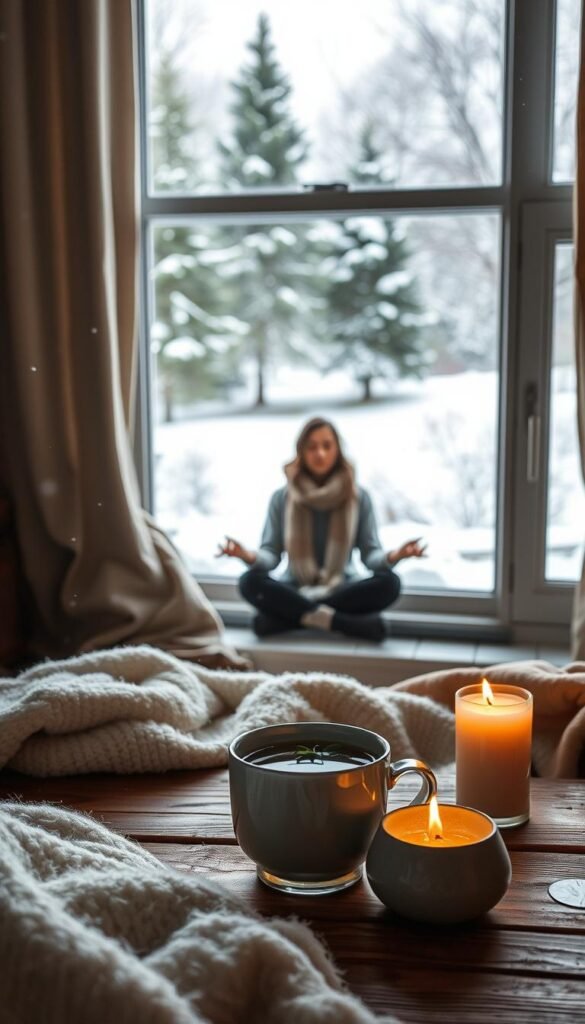
When you dim a lamp, wrap a blanket, or sip a warm cup, the room feels kinder. Those soft signals give your attention an easy place to land. A short breathing pause or a tidy corner can turn scattered energy into steady focus.
Why rituals feel comforting in uncertain times
Repeated, small acts offer predictability when life feels unclear. Writers, performers, and athletes use the same steps each day to cue presence and reduce stress.
These tiny routines are not extra chores. They are gentle ways to carve time and space that support mental health and ease anxiety when the world feels loud.
- Set one simple scene—soft light, a slow inhale, and a brief pause.
- Choose a tiny practice you can return to when chaos arrives.
Stress-Relieving Rituals to bring calm to your daily life
Let one quiet action signal that it’s time to soften and arrive inside yourself.
Arrive softly: an internal check-in with a hand on your heart
Place a hand on your chest and ask, “How am I, truly?” Name one feeling aloud—tired, tender, hopeful. This small pause lets your mind feel heard without trying to fix anything.
Breathing by lamplight: five-count belly breaths
Relax your shoulders. Inhale slowly to five, then exhale to five for two to three minutes. Let your system find a calm rhythm and your focus return to the present.
Mindful sip: a warm cup as a small pause
Warm a cup of tea or cocoa. Hold it, feel the heat, breathe the aroma, and take tiny sips. This gentle moment soothes both body and mind.

- Digital sunset: dim screens, soften lights, and give your attention a rest.
- Slow journaling: write a line or two; let some thoughts rest for tonight.
- Gratitude reframe: note three small comforts from today to invite gentle energy back.
- Gentle connection: send a kind note or make a brief call to someone you love.
| Ritual | Time | Effect |
|---|---|---|
| Arrive softly | 1 minute | Name feelings to calm the mind |
| Breathing by lamplight | 2–3 minutes | Settle the nervous system |
| Mindful sip | 3–5 minutes | Nourish body and focus |
| Digital sunset | 10–30 minutes | Reduce stimulation, invite rest |
| Slow journaling | 5–10 minutes | Declutter thoughts for better sleep |
Optional mini-rituals for busy days and quiet nights
A few gentle actions, taken in ten minutes or less, can soften a hectic day into an evening of rest. These ideas are optional and small. Pick one that fits your energy.

Ten-minute reset: tidy a corner, clear a surface, clear a thought
Set a gentle timer for ten minutes. Fold a blanket, wash a cup, or clear a tabletop.
Why it helps: A small bit of order can reduce stress and lighten your thoughts so the mind can shift away from work.
Evening wind-down: soft lights, warm socks, and an easy stretch
Lower the lights, put on warm socks, and take one slow stretch. Sip a warm cup and notice the breath.
This signals the body that rest is coming and supports better sleep and calmer energy.
Play and creativity: a simple doodle, a song, or a puzzle
Open a notebook, hum a favorite tune, or try a five-minute puzzle. Play refreshes attention without pressure.
What to release: rushing, pressure, and perfection
Allow this: let go of rushing, set down pressure, and soften perfection. One small practice a night is enough.
Journal prompts to ground your evening
- “What felt cozy or kind today, even in a small moment?”
- “What can wait until tomorrow so my mind can rest tonight?”
Keep one gentle ritual close and adapt it to your day and family needs. These short practices can reduce stress, support mental health, and help life feel steadier without asking too much.
Conclusion
Choose one tiny habit tonight to help your mind and body settle into rest.
As winter settles in, let these gentle practices act like a soft blanket around your day. Pick one small ritual to try today that supports your focus without adding to your work list.
Use these moments to meet stress with kindness. Over time, this simple way of caring can support your health and steady your daily life.
Keep what feels good and set down what does not. You are doing enough; may tonight be a little softer and tomorrow a touch lighter, one kind step at a time.
FAQ
How can a gentle morning routine help reduce anxiety during winter?
A calm morning anchors your nervous system. Start with dim light, slow movement, and a brief body check-in. These steps lower cortisol and help you meet the day with clearer focus and steady energy.
What is a simple internal check-in I can do in under a minute?
Place a hand on your heart, take three deep belly breaths, and name one feeling and one need out loud. This short pause brings you into the present and can reduce mental chatter quickly.
How do five-count belly breaths help my body relax?
Breathing slowly with a five-count inhale and five-count exhale activates the parasympathetic system, which slows heart rate and eases muscle tension. Do this for a few minutes to notice reduced restlessness.
Can drinking a warm beverage actually calm my mind?
Yes. Sipping something warm creates a sensory pause and signals safety to the brain. Focus on the cup’s weight, warmth, and flavor for a mindful break that reduces stress in small moments.
What does “digital sunset” mean and how do I practice it?
A digital sunset is setting a time each evening to dim screens and notifications. Try stopping social media and work emails an hour before bed to improve sleep quality and lower nighttime worry.
How can journaling in the evening help me sleep better?
Slow journaling lets you transfer swirling thoughts onto the page, which reduces rumination. Write for five to ten minutes about what went well and what can wait until morning to ease your mind.
What are easy gratitude prompts for a nightly practice?
Name three small, specific moments you appreciated today—like a warm drink, a kind message, or a quiet commute. These moments shift attention from anxiety to positive detail and improve mood.
How do I connect gently with someone when I’m stressed?
Send a short, kind message or make a brief call to share something simple. Saying “I’m thinking of you” or thanking someone for their support fosters warmth and reduces isolation without high effort.
What is a ten-minute reset I can use at work or home?
Pick one small area—clear a desk corner, tidy a nightstand, or put away laundry. The physical clearing often clears mental clutter and gives you a quick sense of control and calm.
What should I include in an evening wind-down routine?
Dim lights, put on warm socks, do a gentle stretch, and lower stimulation before bed. These cues help your body transition from activity to rest and improve sleep onset.
How can creative play reduce stress in a short time?
Simple creative acts—doodling, humming a song, or solving a quick puzzle—shift attention from worry to flow. These activities engage different brain regions and reset your mood within minutes.
What are healthy things to let go of at the end of the day?
Release rushing, pressure to be perfect, and tasks that can wait. Acknowledge what you did, set a clear plan for tomorrow if needed, then close the day to protect your rest.
Can you suggest journal prompts to ground my evening?
Try: “What eased me today?” “What needs to be let go tonight?” and “What one small thing can I do tomorrow to feel supported?” These prompts create closure and reduce bedtime worry.
How often should I practice these small calming habits to notice benefits?
Consistency matters more than length. Daily short practices—five to fifteen minutes—build resilience and lower baseline stress over weeks, improving focus, rest, and overall mental health.